Over £200k to Support Gaelic Projects in Communities across Scotland

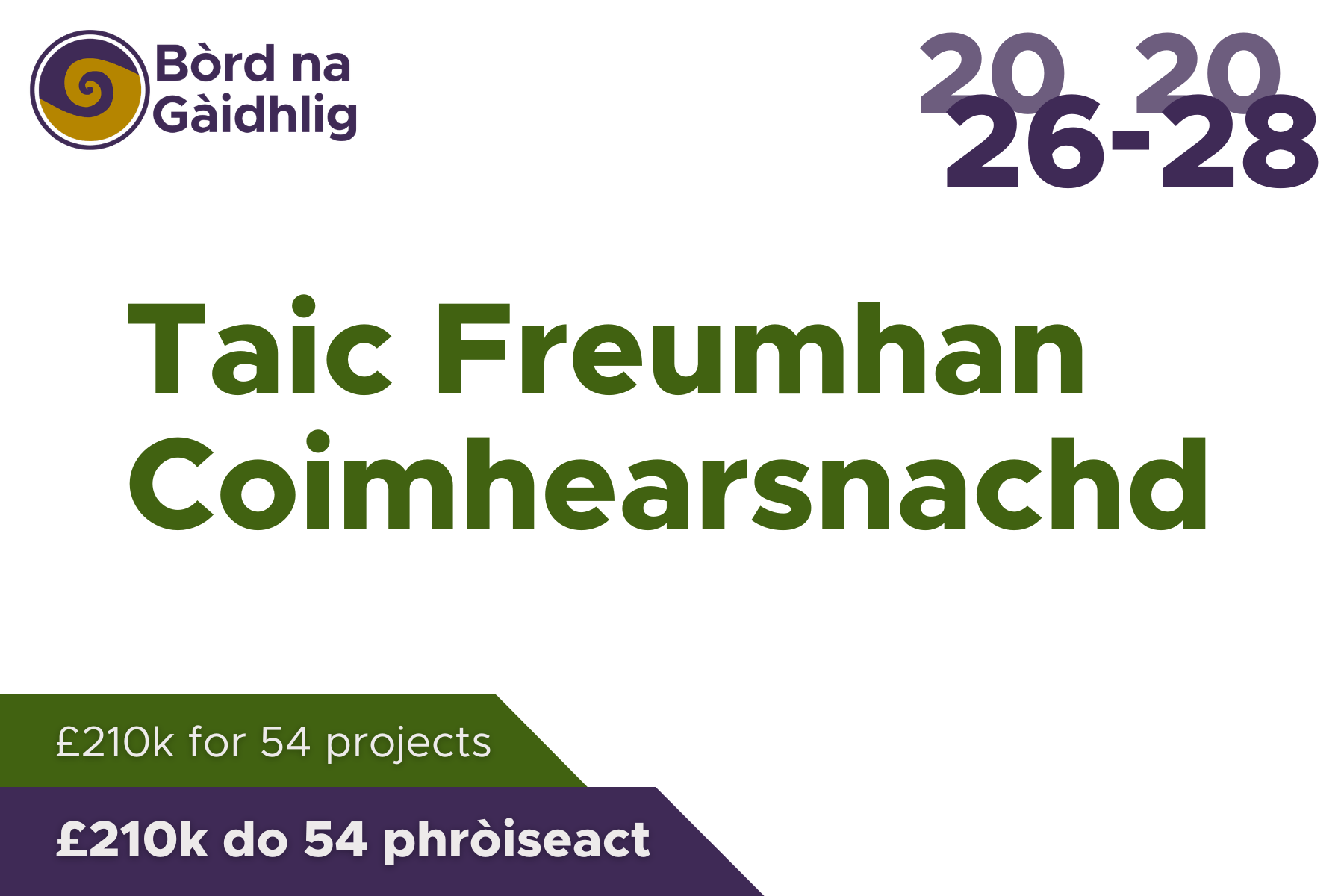
Bòrd na Gàidhlig has committed up to £210,000 to 53 Gaelic projects that will run between 2026 and 2028. This has been done through the Taic Freumhan Coimhearsnachd (Community Grants) funding scheme, Bòrd na Gàidhlig’s primary fund for supporting projects to promote and increase the usage and learning of Gaelic at community level in Scotland.

Funding has been approved for projects across Scotland and a wide range of community groups, schools, Gaelic centres and other groups will be supported. For the first time, the scheme was also opened to independent individuals as well as organisations with the aim of removing barriers to community-lead Gaelic development. Bòrd na gàidhlig hopes that this will encourage people of all ages across the country to speak and learn Gaelic and provide much needed support to Gaelic communities.

As well as the 53 projects to be supported through this year’s round of funding, there are an additional 32 receiving continued support that was granted in 2025. These groups are still building on the work they’ve been doing in regions across the country to encourage people to speak and learn Gaelic and will carry that work forward over the coming year.

Artsplay Highland is the group receiving the largest grant, £10,000 over two years. The funding will be used to develop their Ceòl is Cèilidh (Music and Ceilidh) project, which will support young children and families to speak Gaelic together more often. This will be done through the delivery of Gaelic classes and family ceilidhs in nurseries and primary schools and the creation of digital resources. Artsplay Highland hope that at least 125 children and families will benefit from the project and will be encouraged to use more Gaelic together at home.

Back Historical Society will be the recipient of the biggest grant made to an organisation based in the Western Isles. The group will receive £7,000 for their Muinntir a’ Bhac (the People of Back) project, which has been running since 2024 with support through that year’s round of Community Grants funding. The group organises community events and opportunities for people of all ages in the local community to speak Gaelic together. The plan is to expand this events programme and to add to their existing digital archive, which can be used to learn about the history of the area and to hear the local Gaelic dialect.

12 groups have been granted between £5,000 and £10,000 to deliver a range of projects. Among these are Cultarlann Inbhir Nis, who’ll receive £5,000 for the continuation of their Gaelic Cafe Cafe Cabadaich, and Bothan Dhùn Èideann, who plan to use their £8,000 grant to organise monthly concerts and Gaelic nights in Edinburgh over the next two yeas.

There are groups who will receive smaller grants too, ranging from £800 – £5,000. This includes Portree High School, the Lochaber Fèis, Stornoway Primary School, and the Trotternish Centre. While the nature and scope of these projects vary, they all share an aim of encouraging and increasing Gaelic use in their communities.

Màiri MacInnes, Chair, Bòrd na Gàidhlig, said:

Gaelic being used every day in communities is a priority focus for us at Bòrd na Gàidhlig, as well as being at the heart of the National Gaelic Language Plan 2023-28. Bòrd na Gàidhlig aims to support the efforts of people and organisations in our communities to create new opportunities for people to use and learn Gaelic in the way that best suits their specific community.

The Taic Freumhan Coimhearsnachd (Community Grants) scheme is an important way in which we give this support and I’m very much looking forward to seeing the impact of the work the successful applicants will carry out over the next two years.”

Steven Kellow, Funding and Projects Manager, Bòrd na Gàidhlig, said:

“It’s been very encouraging to see such a big interest in creating opportunities for Gaelic to be spoken and learned in communities across the country. It’s great that so many groups and individuals have come to us with new and exciting ideas and we look forward to working with them over the next two years to bring those ideas to fruition.”

More information about the TFC funding scheme can be found here.

Bòrd na Gàidhlig run a range of funding schemes at different times throughout the year. If you have a project you would like to deliver and you would like to speak to Bòrd na Gàidhlig about funding opportunities, please email tabhartas@gaidhlig.scot.


Funding Recipients by Local Authority

Aberdeen

Independent Individual: Aberdeen Sradagan (extracurricular activities group) – £4,000


Argyll and Bute

Arrochar Gaelic Language and Culture Society: Gaelic Culture in the Community – £3,000

Comann nam Pàrant Cowal: Tugainn! – £4,000

Comunn Gàidhealach Mhuile (mull Mòd Club): Further Gaelic Sharing in the Community through young People – £2,400

Independent Individual: Gaelic Development in Central Argyll – £3,300


Dumfries and Galloway

Gàidhlig Dumgal: Gaelic Learning for Adults – £8,000


East Dunbartonshire

Bishopbriggs Gaelic Group: Gaelic Learning Opportunities for Adults – £7,000


Edinburgh

Bothan Dhùn Èideann: Bothan 2026-28 – £8,500

Ionad Gàidhlig Dhùn Èidean: Community Sessions – £2,500

Parkside Primary School: Parkside Music Project – £1,750


Glasgow

Gàidhlig san Dachaigh (South Glasgow): Gaelic Classes for Adults – £5,000

Maryhill Burgh Halls Trust: Bruidhinn ar Cànan: Everyday Gaelic in Maryhill – £3,500


Highland

Acharacle Community Company: Cupan agus Cabadaich (tea and a chat) – £4,000

Artsplay Highland: Ceòl agus Cèilidh (music and Ceilidh) – £10,000

ATLAS Arts: Isle of Skye Schools Song Books – £4,000

Brora Heritage Centre / Clyne Heritage Society: (Re)Connecting our Gaelic Heritage – £8,000

Columba 1400: Gaelic Classes – £5,500

Comann nam Pàrant Portree: Sradagan (extracurricular activities group)- £4,000

Cultarlann Inbhir Nis: Gaelic Cafe (3) – £5,000

Eadarainn (Dingwall Gaelic Choir): Gaelic Development Project – £1,750

Fèis na h-Òige: Friday Club – £3,625

Independent Individual: Gaelic in East Sutherland – £4,500

Independent Individual: Singing Together (Breakish) – £1,000

Kilmuir & Staffin Cluster: Gaelic in the Community – £4,100

Kinlochewe Village Hall: Speaking Gaelic – £3,000

Lochaber Fèis: Lochaber Fèis Sports – £2,200

Lochaber Gaelic Choir: Labhair – £1,750

Portree high School: Gaelic Trip on the isle of Skye – £800

Strathnairn Development Company: Gaelic Heritage in Strathnairn – £7,500

The Trotternish Centre: The Trotternish Centre and Dublin Gaelic Circle – £3,000

Ullapool high School: Nova Scotia Trip – £4,000


Inverclyde

Inverclyde Gaelic Learners Group: Gaelic Learning opportunities for Adults – £2,000


North Lanarkshire

Greenfaulds High School: A Trip to Flodigarry – £8,000


Perth and Kinross

The Growspace Network: Dàimh na Tìre: Gaelic Heritage, Community, and the Future of the Land – £4,000

Live Music Now Scotland: Perth Tea and Tunes – £3,000


Renfrewshire

West Primary Shool: Gaelic at West Primary School – £3,000


The Scottish Borders

Independent Individual: Gaelic in the Scottish Borders – £3,000


South Ayrshire

Friends of the Broadway Prestwick: The Broadway Cinema Phase One – £2,000


Stirling

Làmhan: Fèis Calasraid – £4,000


Western Isles

Back Historical Society: Voices of the People of Back (2) – £7,000

Bragar and Arnol Community Trust: Gaelic at Grinneabhat – £4,000

Caraidean Uibhist SCIO: Caraidean (friends) – £2,500

Carloway Estate Trust: Youth Immersion Trip – £2,200

Fèis Taigh Dhonnchaidh: Our Voices from Ness – £4,750

Lionel School: Lionel Schools Songs – £2,000

Ness Historical Society: young Historians – £1,295

Stornoway Primary School: P7 Trip to Edinburgh – £2,000

Uist Council of Voluntary Organisations (UCVO): Tea, Cake, and Conversation – £3,000


National

Independent Individual: Play in a Day – £2,500

Lingo Flamingo: Bidh Seana-ghuth a’ Roinn na h-Aoise – £6,500

Open Book: Gaelic Project – £7,700


International

Independent Individual: A-nunn ‘s Anall – £2,000

Independent Individual: Music of the Gaels – £3,500
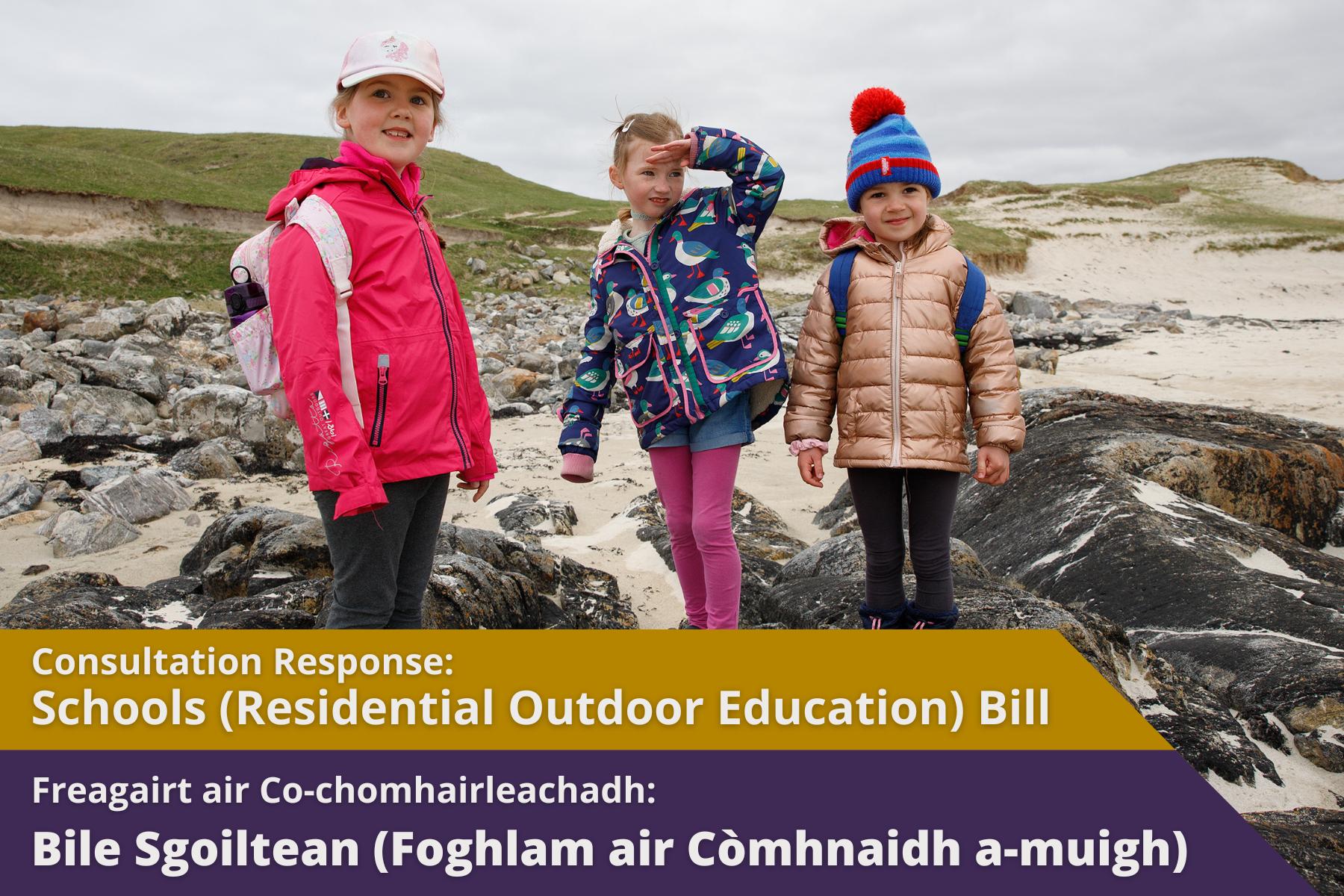
Consultation Response: Schools (Residential Outdoor Education) (Scotland) Bill

Bòrd na gàidhlig have submitted a response to the Scottish Government’s consultation on the Schools (Residential Outdoor Education) (Scotland) Bill. Amongst the points raised, we said:

“In Gaelic medium Education (GME), practical experiences to use the language are essential. Access to a range of outdoor experiences can enable children and young people to use their Gaelic language skills in social settings by taking the language out of the classroom. The sooner these opportunities are provided the better to help develop confidence and language skills.”

The full response can be read here.

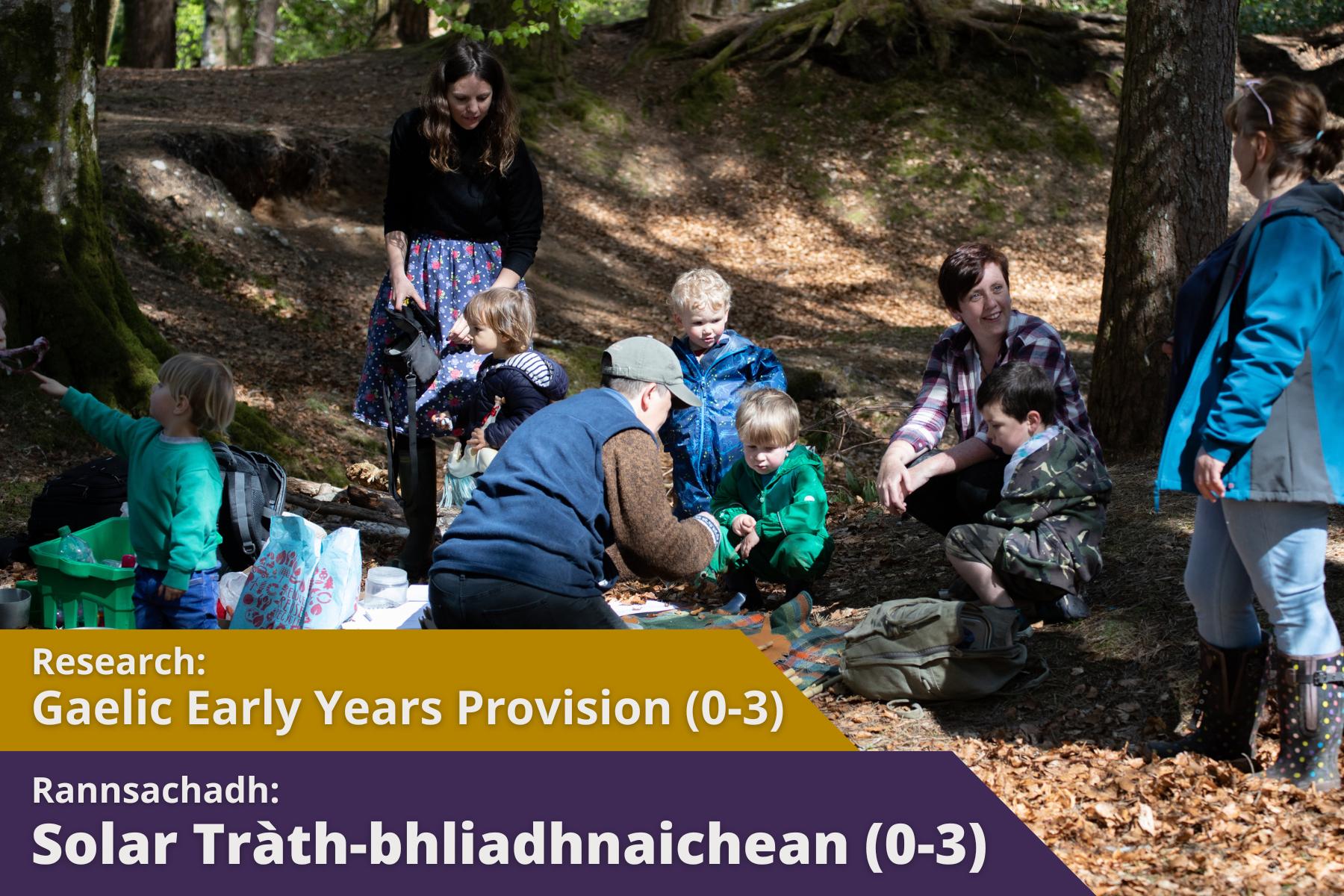
Research on Gaelic Early Years Provision (0-3)

Today Bòrd na Gàidhlig published a report on the research we commissioned looking at Gaelic early years provision (0-3) in Scotland.

The research was conducted by Professor Wilson McLeod and identifies a wide range of issues that effect early years (EY) provision. Professor McLeod also makes a number of suggestions for possible improvements in the EY sector in the report, including the prospects for addressing issues around Gaelic EY provision through the Scottish languages Bill.

Jennifer McHarrie, Director of Education, Bòrd na Gàidhlig, said:

“Bòrd na Gàidhlig welcomes this research which was commissioned to assess the current levels of Gaelic early years provision across Scotland. This report contains recommendations for changes that can be made by a number of organisations who are active in this sector to create more complete and effective provision.

“We look forward to continuing to work with our partners to support growth in Gaelic, particularly at the early years level. The earlier a child hears and engages with the language, the more likely they are to develop a lifelong interest and become more proficient.

The full report is available to read here.

Survey on Gaelic Usage 2024

Every year we run a short questionnaire looking at the use of Gaelic and how Gaelic usage might have changed over the last year.

We’re looking for anyone with a little bit or a lot of Gaelic to fill in the questionnaire and it will take less than 5 minutes to complete.

The questionnaire is only open for 24hrs and will close at 1pm tomorrow, Wednesday 26.06.24!

Complete the questionnaire here.

Stakeholder Survey 2023

Have you had dealings with Bòrd na Gàidhlig in the past year?

The Stakeholder Survey 2023 is now open and we look forward to hearing your thoughts and suggestions.

It would be much appreciated if you could complete this form by 5pm on Monday 23rd October 2023.

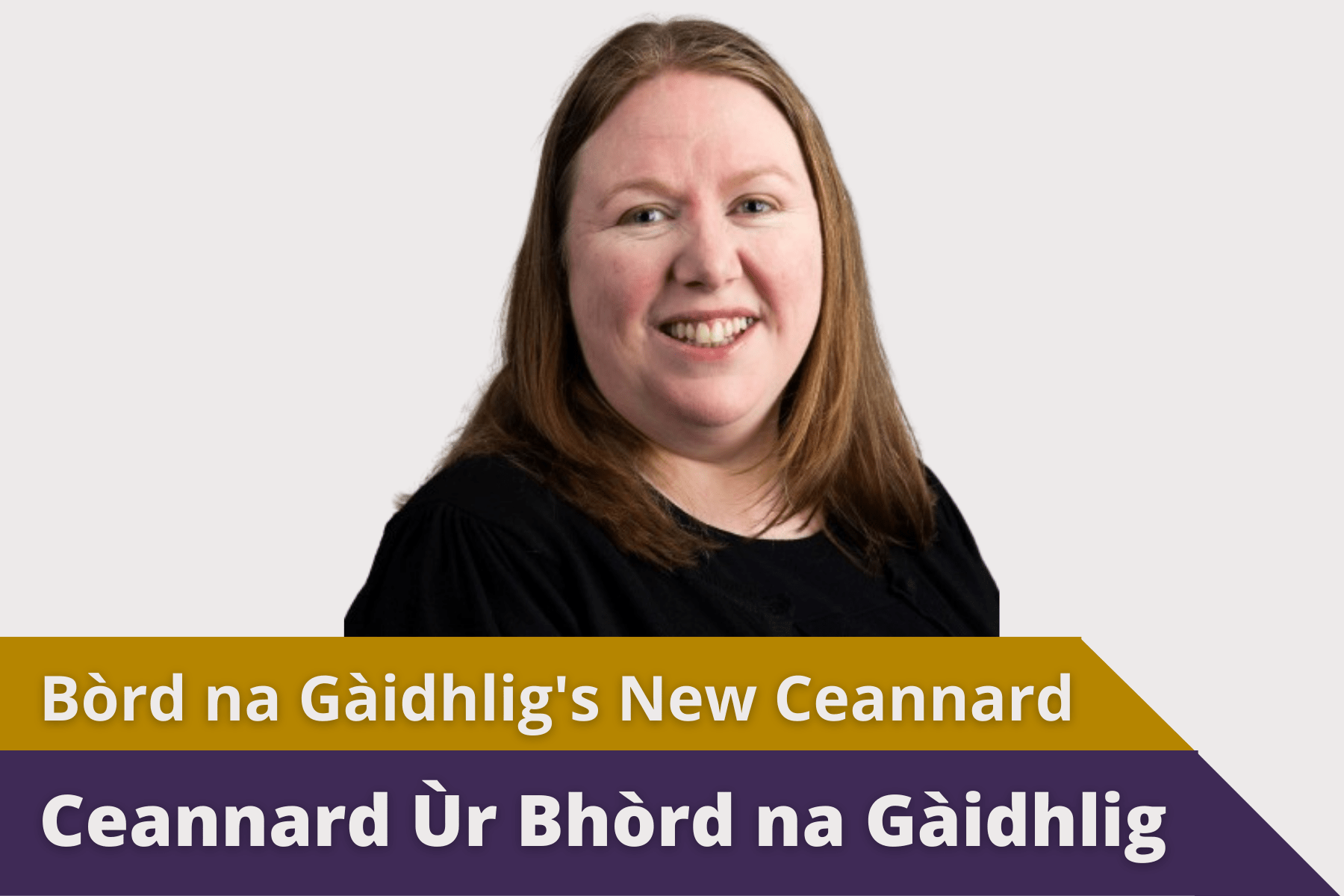
New Ceannard of Bòrd na Gàidhlig Appointed

Bòrd na Gàidhlig today announced the appointment of Ealasaid MacDonald as its new Ceannard (CEO) who will take up the post in September 2023.

Ealasaid, hailing from the Western Isles and with her home in Stornoway has extensive experience of working in both mainland and island settings.  In her current role as Director of Strategy and External Affairs with MG ALBA she leads on corporate and stakeholder communications. With experience of working in the public sector and as a freelance policy and public affairs consultant, Ealasaid has been at the forefront of many initiatives and developments to promote the needs of Gaelic speakers throughout her career.

Based in Stornoway, Ealasaid will lead Bòrd na Gàidhlig through forthcoming developments, working closely with Board members and the senior management team, and also with Scottish Government, public bodies and Gaelic communities.

Màiri MacInnes, Chair of Bòrd na Gàidhlig, said: “We are delighted to welcome Ealasaid to this important role, at an exciting time for the progress of the Gaelic language with a new National Gaelic Language Plan and a new Scottish Languages Bill. She has a background working with key public bodies and with a particular focus on corporate policy initiatives. With her experience of working in this sector, Bòrd na Gàidhlig will benefit from the skills she has acquired in management and development issues related to the Gaelic language and culture.”

Ealasaid said, “I am very pleased to be taking on this important role at a crucial time for Gaelic. I look forward to working with our communities, Gaelic organisations and wider partners to develop the Gaelic language across Scotland and beyond. Working in partnership is a reason for success as we look towards the new National Plan for Gaelic, it is more important than ever.”

Education Secretary Jenny Gilruth said: “I would like to welcome the appointment of Ealasaid MacDonald as the next CEO at Bòrd na Gàidhlig and congratulate her on a successful application for this important ministerial appointment.”

“The Scottish Government is looking forward to working closely with Ealasaid and the team at Bòrd na Gàidhlig in supporting and promoting Gaelic across Scotland as we prepare to take forward our Scottish Languages Bill.”

Statement on Gaelic Event at the Scottish Parliament (27.06.2023)

Mary McInnes, Chair of Bòrd na Gàidhlig said about the event:

“We welcome today’s event about Gaelic in the Scottish Parliament. Bòrd na Gàidhlig continues to work with communities and organisations in the Western Isles and elsewhere to increase the use of Gaelic as a community language.

“This follows the recognition in the third National Gaelic Language Plan that the traditional Gaelic communities face challenges in retaining economically active populations and that innovative solutions are critical in relation to employment, housing, transport, childcare and health care.

“It is vital that our Gaelic communities are at the forefront of consideration at the Convention of the Highlands and Islands and Regional Economic Partnership, and that their voice is represented in consultations on issues such as HPMAs, ferry services, housing and land reform.

“Bòrd na Gàidhlig received additional funding from the Scottish Government in 2021 and 2022 to support a network of Gaelic officers, who work with 20 community organisations in the islands, to strengthen both the use of Gaelic and its development. This scheme has awarded almost £1million since its inception two years ago.”

You can listen to the BBC’s report on the event on Aithris na Maidne here. The piece runs from 0:13:05 to 0:20:50.

Short Life Working Group on Economic and Social Opportunities for Gaelic: Report to the Cabinet Secretary for Finance and the Economy

In March 2022, the Cabinet Secretary for Finance and the Economy convened a Short Life Working Group (the Group) with an aim to strengthen Gaelic by means of a focus on economic opportunities and to strengthen the economy by making the most of Gaelic opportunities. The Group has published a report this morning explaining the context in which the group worked, some of the challenges facing Gaelic and also the good opportunities the languages has for positive social, economic, cultural, and educational outcomes.

The report is available on the Scottish Government’s website in both Gaelic and English and can be read here.

As part of the process, Bòrd na Gàidhlig me twith the Group on two occasions before submitting a paper to the Group, reporting and commenting on childcare, health and social care, tourism, education and teacher recruitment, housing, and a range of other issues impacting Gaelic in Scotland today. Bòrd na Gaelic have also made this paper available to read here.

On publication of the report, Mairi MacInnes, Chair of Bòrd na Gàidhlig, said:

“We welcome the Short Life Working Group’s Economic and Social Opportunities for Gaelic report to Cabinet Secretary for Finance and the Economy.  It clearly demonstrates the links between economic opportunities the language creates and the changes required to safeguard and grow Gaelic. Bòrd na Gàidhlig also welcome the group’s acknowledgment that additional funding is required to take forward new initiatives and Gaelic policy development and that it is an important aspect of the National Strategy for Economic Transformation.  We were pleased to provide evidence to the Group across a range of policy areas.

“This report highlights the need for traditional communities of Gaelic speakers to be maintained and increased. This echoes the National Gaelic Language Plan which emphasises the demographic challenges island and rural communities face.  These include lack of housing, the working-age population, poor transport links and social challenges and provides a range of solutions.  It also recognises the role and importance of the urban communities in increasing the number of Gaelic speakers and use of the language.

“Bòrd na Gàidhlig is committed to working collaboratively to help implement these recommendations and drive positive change.”

Bòrd na Gàidhlig commissions new research into links between wellbeing and Gaelic

As understanding and increasing wellbeing become more important in all our lives, Bòrd na Gàidhlig has awarded a commission to DC Research to carry out a study into how Gaelic enhances the wellbeing of individuals, communities and the nation as a whole.

Wellbeing is increasingly recognised as a factor in a wide range of fields across the economy and society. Online meetings in Gaelic during the Covid-19 pandemic demonstrated that wellbeing, inclusion and networking were important and could be enhanced, and also demonstrated the role of Gaelic in increasing wellbeing generally.

The recent Scottish Social Attitudes Survey (2021) revealed that 70% of those learning Gaelic believed that this contributed to their wellbeing.  As the numbers of people learning the language grows, this aspect of engaging with Gaelic could be increasingly important.

When it commences this month, the research will evaluate and describe how Gaelic contributes more widely to society as more than just a language but as a culture and provide an understanding of how facets of wellbeing can be used to assist and encourage Gaelic users, as speakers and learners and as a language community. It will also set out, in a political context, how Gaelic contributes to the National Performance Framework (NPF), as well as seeking to evaluate and describe the contribution of Gaelic so that this is recognised while also considering research in other minority languages.

Shona MacLennan, Ceannard, Bòrd na Gàidhlig said: “We recognise that wellbeing is increasingly important, both for individuals and for society.  The evidence from this research will help us to make stronger arguments for ensuring that Gaelic, and its contribution to wellbeing, is recognised and supported in national and regional policies so as to provide greater support for Gaelic communities.”

Dr Stephen Connolly, Director at DC Research and project manager for the research, who will be working alongside Professor Mike Danson, Dr Douglas Chalmers and Eilidh Danson on the study, said: “We are looking forward to exploring these issues around Gaelic and wellbeing in consultations with a range of experts, speakers and influencers from Scotland and internationally over the summer months”.

Rural and Islands College Merger proposal: consultation

Bòrd na Gàidhlig has submitted a response to the consultation: Rural and Islands College Merger proposal. Among the points raised:

We would recommend that part of the merger proposals could include plans to build capacity to deliver such a range of subjects in the medium of Gaelic, in particular to support schools. This could include using college staff to deliver Senior Phase courses in either face-to-face or online settings.

We would expect that an Islands Communities Impact Assessment would be undertaken as part of the merger process. Reflecting Scottish Government guidance, this needs to include the impacts on the Gaelic language.

The full response can be accessed here.

x  Powerful Protection for WordPress, from Shield Security
This Site Is Protected By
Shield Security