New nationwide ‘Gach Latha’ campaign launched to inspire use of Gaelic every day


A new campaign is being unveiled today (19 March) encouraging people and organisations to commit to using the Gaelic language every day across Scotland. The ‘Gach Latha’ movement aims to showcase Gaelic being spoken in communities, online and in workplaces, inspiring more people to use the language with confidence.


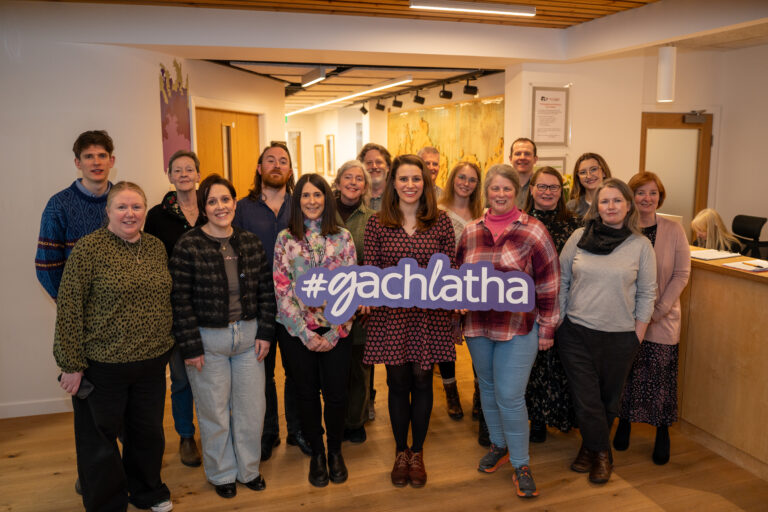
Picture: A group of Gaelic officers standing together and holding a large sign that reads "#gachlatha".


Private, public and third sector bodies are being urged to join the campaign by pledging to incorporate Gaelic words and phrases into every working day in some way.

High-profile organisations have already given their backing to the initiative, including the Scottish Chambers of Commerce, the University of the Highlands and Islands (UHI), True North Advisors and Inverness Chamber of Commerce.

‘Gach latha’ translates as ‘every day’ in English. The new campaign is being spearheaded by Bòrd na Gàidhlig, Scotland’s Gaelic body, which marks its 20th anniversary in 2026.

Organisations can give their backing to the initiative in a variety of different ways, with support from Bòrd na Gàidhlig.

Gaelic speakers of all abilities are also being asked to show their love for the language through posts on social media from today, using the #gachlatha hashtag. 


Ealasaid MacDonald, CEO of Bòrd na Gàidhlig, said: 

“We are inviting people and organisations across Scotland to join this movement to use Gaelic every single day.

“We know there is great love and interest in the Gaelic language and culture across Scotland and beyond, and we are seeing encouraging growth in the number of people learning Gaelic.

“There are fantastic events organised accross the country by organisations like An Comunn Gàidhealach, Fèisean nan Gàidheal, Ceòlas, and a wide range of others that successfully showcase Gaelic in our homes, our schools, our streets, and our businesses each year. With this new ‘Gach Latha’ campaign, we want to build everyday momentum for Gaelic.

“You absolutely do not have to be a fluent speaker to participate – we want to hear from people from all walks of life, including businesses and organisations – who want to show their love for Gaelic and speak it more often.

“Our hope is that when people see friends, colleagues or even their managers using Gaelic on social media or in the workplace, it will give them the confidence to join in.”


Charandeep Singh BEM, Chief Executive of the Scottish Chambers of Commerce, said: 

“I am delighted to support this important initiative from Bòrd na Gàidhlig, which recognises Gaelic as both a cultural treasure and a valuable economic asset for Scotland’s future.

“The Gach Latha campaign has real potential to increase the visibility and everyday use of Gaelic across workplaces in Scotland.

“Many of our members are already engaging with Gaelic in creative ways, and this campaign will help accelerate that even further. I look forward to engaging in the campaign and seeing more businesses use the language in innovative ways to strengthen its role in our cultural identity and in Scotland’s wider economic story.”


Vicki Nairn, Principal and Vice-Chancellor of the University of the Highlands and Islands (UHI), said: 

“Gaelic is a vital part of the culture and identity of the Highlands and Islands.

“Through our Gaelic Language Plan, UHI is committed to increasing the visibility and everyday use of Gaelic across our learning, research and community partnerships.

“Initiatives like the Gach Latha campaign are a positive way to encourage people of all abilities to use Gaelic more often and with confidence.”

Eilidh Alexander, Head of Membership for Inverness Chamber of Commerce, said: 

“We absolutely welcome Bòrd na Gàidhlig’s “Gach Latha” movement, both as a way of celebrating the Gaelic language and in helping to foster connection amongst the business community. Many of our members are native speakers or passionate learners, who use Gaelic as a way of providing their clients with a unique, tailored service, as well as safeguarding the future of the language and our rich heritage.

“Growing up in a Gaelic-speaking community, I took using the language on a daily basis for granted, and unfortunately for me, that ended when I left school. However, over the past two years whilst working at Inverness Chamber, I have had more opportunities to connect with other Gaelic speakers than I have in the previous 15.

“This has boosted my confidence and ability to use Gaelic conversationally and in emails to members, no matter how rusty I feel, and has reignited my passion for the language.

“Gaelic speakers probably converse all the time without knowing that they share this skill, and the “Gach Latha” movement will help people of all levels and proficiencies to use Gaelic proudly in business and beyond. I hope that Chamber members will join us in committing to using Gaelic daily as part of this inspiring initiative.”


Learn more about the ‘Gach Latha’ campaign at www.gaidhlig.scot/en/gachlatha/

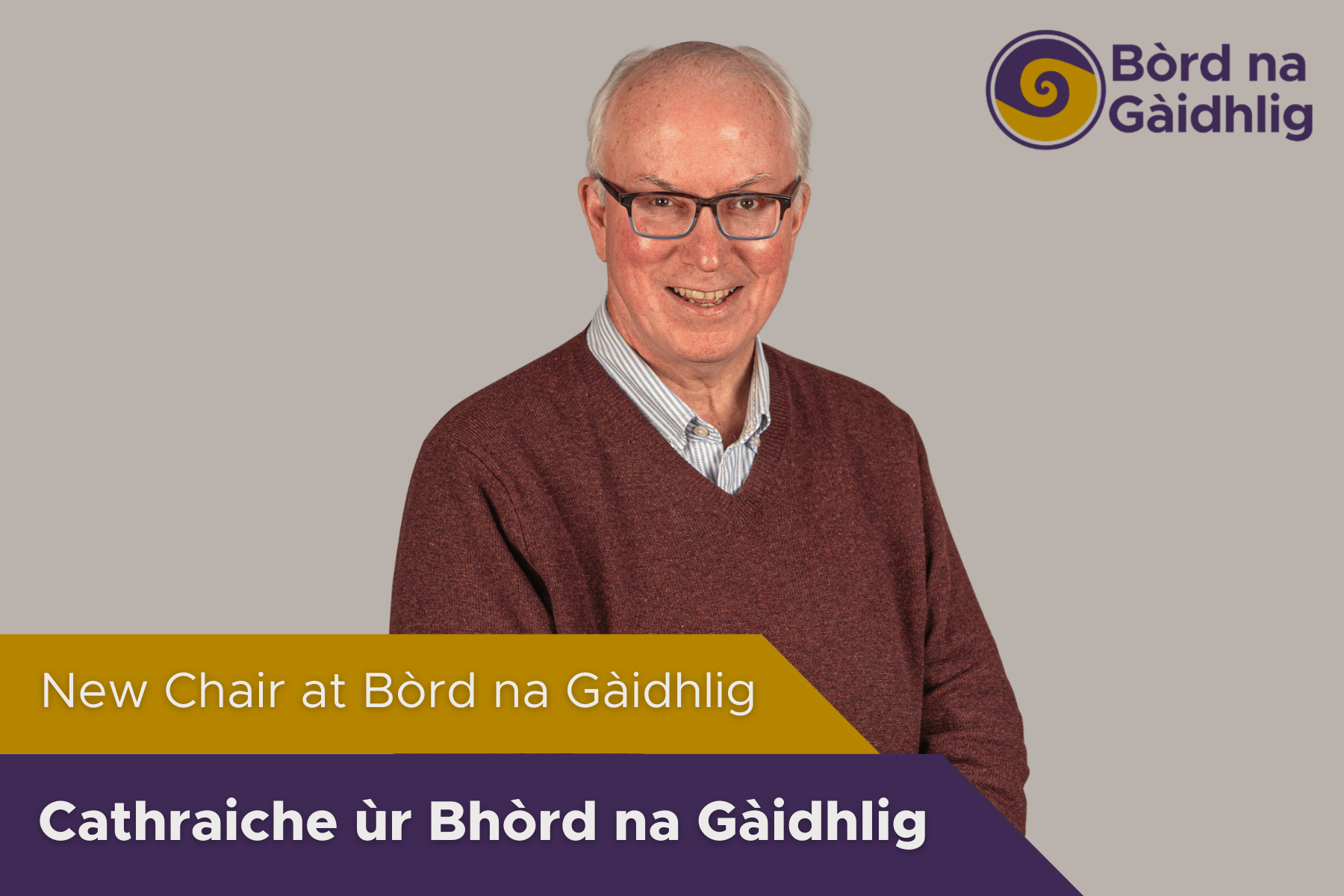
New Chair at Bòrd na Gàidhlig

Today, Professor Robert Dunbar has started in the role of Chair of Bòrd na Gàidhlig.

Originally from Canada, Robert has had a life-long interest in Gaelic development and in Gaelic literature and culture. He has been Professor of Celtic at the University of Edinburgh since June 2013 and is one of the foremost experts in the world on law and policy for linguistic minorities. He is an expert of the Council of Europe in relation to minority language issues, and since February 2023, he has been a member of the Committee of Experts of the European Charter for Regional or Minority Languages, a Council of Europe treaty. Robert has also worked with the Venice Commission of the Council of Europe in relation to language law and language policy and has frequently advised governments, language policy bodies and NGOs on language legislation for minority language.

Robert holds a PhD in Celtic from the University of Edinburgh, on the life and secular poetry of John MacLean (1787-1848), the Tiree and Nova Scotia Gaelic poet, as well as an LL.M from the London School of Economics, an LL.B from Osgoode Hall Law School, Toronto, and a BA from the University of Toronto.

Professor Robert Dunbar was appointed by Public Appointments Scotland until the 1st of January 2030.

Over £200k to Support Gaelic Projects in Communities across Scotland

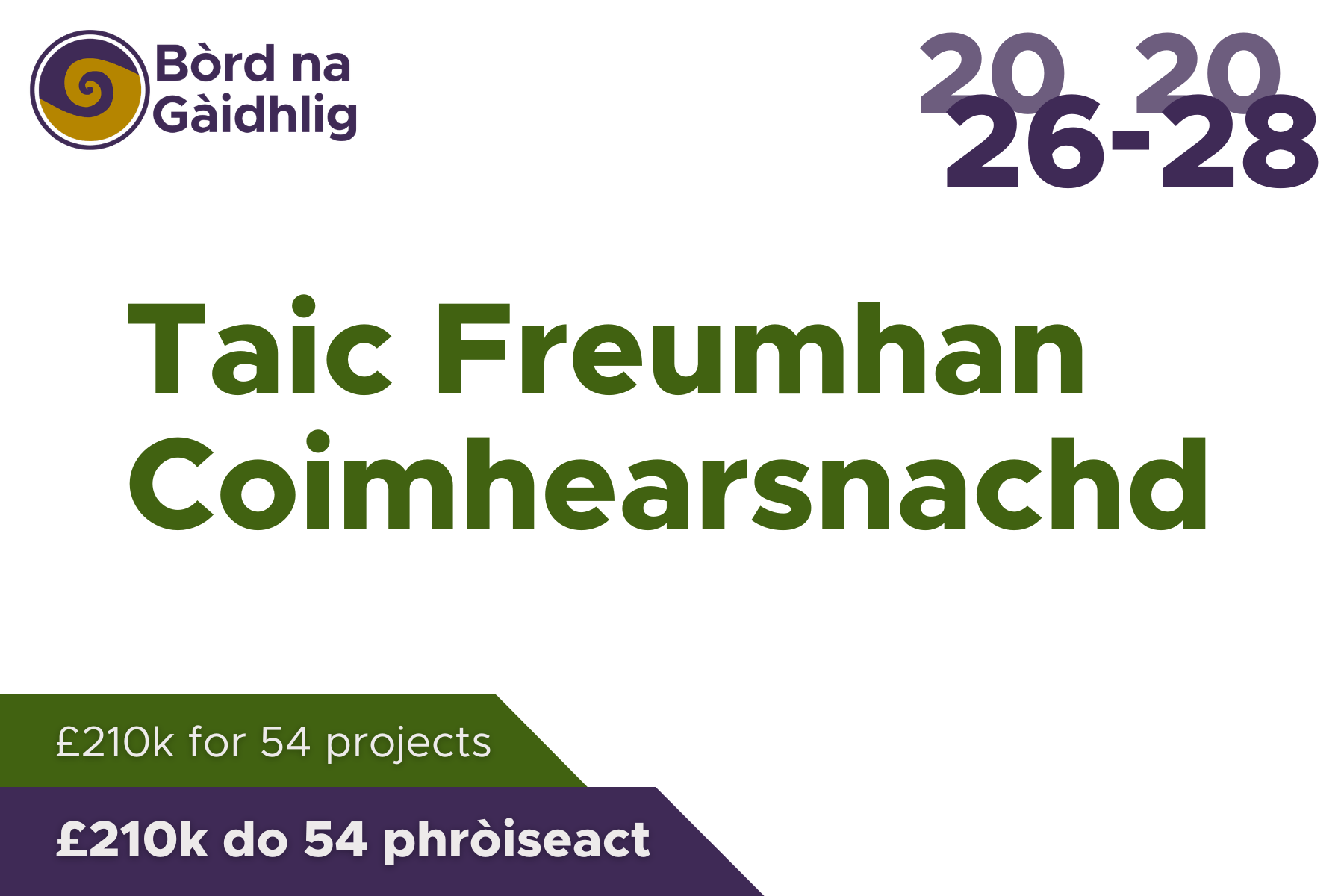
Bòrd na Gàidhlig has committed up to £210,000 to 53 Gaelic projects that will run between 2026 and 2028. This has been done through the Taic Freumhan Coimhearsnachd (Community Grants) funding scheme, Bòrd na Gàidhlig’s primary fund for supporting projects to promote and increase the usage and learning of Gaelic at community level in Scotland.

Funding has been approved for projects across Scotland and a wide range of community groups, schools, Gaelic centres and other groups will be supported. For the first time, the scheme was also opened to independent individuals as well as organisations with the aim of removing barriers to community-lead Gaelic development. Bòrd na gàidhlig hopes that this will encourage people of all ages across the country to speak and learn Gaelic and provide much needed support to Gaelic communities.

As well as the 53 projects to be supported through this year’s round of funding, there are an additional 32 receiving continued support that was granted in 2025. These groups are still building on the work they’ve been doing in regions across the country to encourage people to speak and learn Gaelic and will carry that work forward over the coming year.

Artsplay Highland is the group receiving the largest grant, £10,000 over two years. The funding will be used to develop their Ceòl is Cèilidh (Music and Ceilidh) project, which will support young children and families to speak Gaelic together more often. This will be done through the delivery of Gaelic classes and family ceilidhs in nurseries and primary schools and the creation of digital resources. Artsplay Highland hope that at least 125 children and families will benefit from the project and will be encouraged to use more Gaelic together at home.

Back Historical Society will be the recipient of the biggest grant made to an organisation based in the Western Isles. The group will receive £7,000 for their Muinntir a’ Bhac (the People of Back) project, which has been running since 2024 with support through that year’s round of Community Grants funding. The group organises community events and opportunities for people of all ages in the local community to speak Gaelic together. The plan is to expand this events programme and to add to their existing digital archive, which can be used to learn about the history of the area and to hear the local Gaelic dialect.

12 groups have been granted between £5,000 and £10,000 to deliver a range of projects. Among these are Cultarlann Inbhir Nis, who’ll receive £5,000 for the continuation of their Gaelic Cafe Cafe Cabadaich, and Bothan Dhùn Èideann, who plan to use their £8,000 grant to organise monthly concerts and Gaelic nights in Edinburgh over the next two yeas.

There are groups who will receive smaller grants too, ranging from £800 – £5,000. This includes Portree High School, the Lochaber Fèis, Stornoway Primary School, and the Trotternish Centre. While the nature and scope of these projects vary, they all share an aim of encouraging and increasing Gaelic use in their communities.

Màiri MacInnes, Chair, Bòrd na Gàidhlig, said:

Gaelic being used every day in communities is a priority focus for us at Bòrd na Gàidhlig, as well as being at the heart of the National Gaelic Language Plan 2023-28. Bòrd na Gàidhlig aims to support the efforts of people and organisations in our communities to create new opportunities for people to use and learn Gaelic in the way that best suits their specific community.

The Taic Freumhan Coimhearsnachd (Community Grants) scheme is an important way in which we give this support and I’m very much looking forward to seeing the impact of the work the successful applicants will carry out over the next two years.”

Steven Kellow, Funding and Projects Manager, Bòrd na Gàidhlig, said:

“It’s been very encouraging to see such a big interest in creating opportunities for Gaelic to be spoken and learned in communities across the country. It’s great that so many groups and individuals have come to us with new and exciting ideas and we look forward to working with them over the next two years to bring those ideas to fruition.”

More information about the TFC funding scheme can be found here.

Bòrd na Gàidhlig run a range of funding schemes at different times throughout the year. If you have a project you would like to deliver and you would like to speak to Bòrd na Gàidhlig about funding opportunities, please email tabhartas@gaidhlig.scot.


Funding Recipients by Local Authority

Aberdeen

Independent Individual: Aberdeen Sradagan (extracurricular activities group) – £4,000


Argyll and Bute

Arrochar Gaelic Language and Culture Society: Gaelic Culture in the Community – £3,000

Comann nam Pàrant Cowal: Tugainn! – £4,000

Comunn Gàidhealach Mhuile (mull Mòd Club): Further Gaelic Sharing in the Community through young People – £2,400

Independent Individual: Gaelic Development in Central Argyll – £3,300


Dumfries and Galloway

Gàidhlig Dumgal: Gaelic Learning for Adults – £8,000


East Dunbartonshire

Bishopbriggs Gaelic Group: Gaelic Learning Opportunities for Adults – £7,000


Edinburgh

Bothan Dhùn Èideann: Bothan 2026-28 – £8,500

Ionad Gàidhlig Dhùn Èidean: Community Sessions – £2,500

Parkside Primary School: Parkside Music Project – £1,750


Glasgow

Gàidhlig san Dachaigh (South Glasgow): Gaelic Classes for Adults – £5,000

Maryhill Burgh Halls Trust: Bruidhinn ar Cànan: Everyday Gaelic in Maryhill – £3,500


Highland

Acharacle Community Company: Cupan agus Cabadaich (tea and a chat) – £4,000

Artsplay Highland: Ceòl agus Cèilidh (music and Ceilidh) – £10,000

ATLAS Arts: Isle of Skye Schools Song Books – £4,000

Brora Heritage Centre / Clyne Heritage Society: (Re)Connecting our Gaelic Heritage – £8,000

Columba 1400: Gaelic Classes – £5,500

Comann nam Pàrant Portree: Sradagan (extracurricular activities group)- £4,000

Cultarlann Inbhir Nis: Gaelic Cafe (3) – £5,000

Eadarainn (Dingwall Gaelic Choir): Gaelic Development Project – £1,750

Fèis na h-Òige: Friday Club – £3,625

Independent Individual: Gaelic in East Sutherland – £4,500

Independent Individual: Singing Together (Breakish) – £1,000

Kilmuir & Staffin Cluster: Gaelic in the Community – £4,100

Kinlochewe Village Hall: Speaking Gaelic – £3,000

Lochaber Fèis: Lochaber Fèis Sports – £2,200

Lochaber Gaelic Choir: Labhair – £1,750

Portree high School: Gaelic Trip on the isle of Skye – £800

Strathnairn Development Company: Gaelic Heritage in Strathnairn – £7,500

The Trotternish Centre: The Trotternish Centre and Dublin Gaelic Circle – £3,000

Ullapool high School: Nova Scotia Trip – £4,000


Inverclyde

Inverclyde Gaelic Learners Group: Gaelic Learning opportunities for Adults – £2,000


North Lanarkshire

Greenfaulds High School: A Trip to Flodigarry – £8,000


Perth and Kinross

The Growspace Network: Dàimh na Tìre: Gaelic Heritage, Community, and the Future of the Land – £4,000

Live Music Now Scotland: Perth Tea and Tunes – £3,000


Renfrewshire

West Primary Shool: Gaelic at West Primary School – £3,000


The Scottish Borders

Independent Individual: Gaelic in the Scottish Borders – £3,000


South Ayrshire

Friends of the Broadway Prestwick: The Broadway Cinema Phase One – £2,000


Stirling

Làmhan: Fèis Calasraid – £4,000


Western Isles

Back Historical Society: Voices of the People of Back (2) – £7,000

Bragar and Arnol Community Trust: Gaelic at Grinneabhat – £4,000

Caraidean Uibhist SCIO: Caraidean (friends) – £2,500

Carloway Estate Trust: Youth Immersion Trip – £2,200

Fèis Taigh Dhonnchaidh: Our Voices from Ness – £4,750

Lionel School: Lionel Schools Songs – £2,000

Ness Historical Society: young Historians – £1,295

Stornoway Primary School: P7 Trip to Edinburgh – £2,000

Uist Council of Voluntary Organisations (UCVO): Tea, Cake, and Conversation – £3,000


National

Independent Individual: Play in a Day – £2,500

Lingo Flamingo: Bidh Seana-ghuth a’ Roinn na h-Aoise – £6,500

Open Book: Gaelic Project – £7,700


International

Independent Individual: A-nunn ‘s Anall – £2,000

Independent Individual: Music of the Gaels – £3,500

TFC Open Sessions

The Taic Freumhan Coimhearsnachd (Community Grants) funding scheme is currently open to applications for projects that will be delivered in 2026-28, but who can apply, what support is available, and how should an application be submitted?

Bòrd na Gàidhlig’s Funding an Projects Manager, Steven Kellow, has organised two open sessions where you can have your questions about the scheme answered. The first session will be delivered in Gaelic only and the second session will be delivered bilingually in Gaelic and English.

Sessions dates:

  • Gaelic session – 10.11.25 at 10am
  • Bilingual session – 13.11.25 at 2pm

You can find more information about these sessions and register to attend them here, through Eventbrite.

Taic Freumhan Coimhearsnachd (Community Grants) scheme 2026-28

Bòrd na Gàidhlig have opened the Taic Freumhan Coimhearsnachd (Community Grants) scheme for another round of funding, providing support to Gaelic projects in communities across Scotland. There is funding available for up to two years and, for the first time, applications will be accepted from individuals as well as community organisations.

There is up to £10,000 (£5,000 per year) of funding available to projects that promote and support:

  • Gaelic events in your community and online
  • Projects and opportunities that encourage young people to use Gaelic together outside of school
  • Projects that support Gaelic usage among families and between generations
  • Adult Gaelic learning in the community
  • Colmcille – Building connections between speakers of Gaelic and Irish

Bòrd na Gàidhlig expects a high standard and number of applications, with a total expected budget of £100,000 per year (dependant on confirmation of Bòrd na Gàidhlig’s 2026/27 budget).

Two open sessions will be delivered online, providing an opportunity to applicants to ask any questions they may have regarding the funding scheme or the application process. More information about these can be found on Eventbrite.

More information about the Taic Freumhan Coimhearsnachd funding scheme can be found on the dedicated TFC page on Bòrd na Gàidhlig’s website. You can also get in touch with Bòrd na Gàidhlig’s funding team at  tabhartas@gaidhlig.scot should you like any other information.

You can find more information about Bòrd na Gàidhlig’s other funding schemes on our Funding Schemes page.

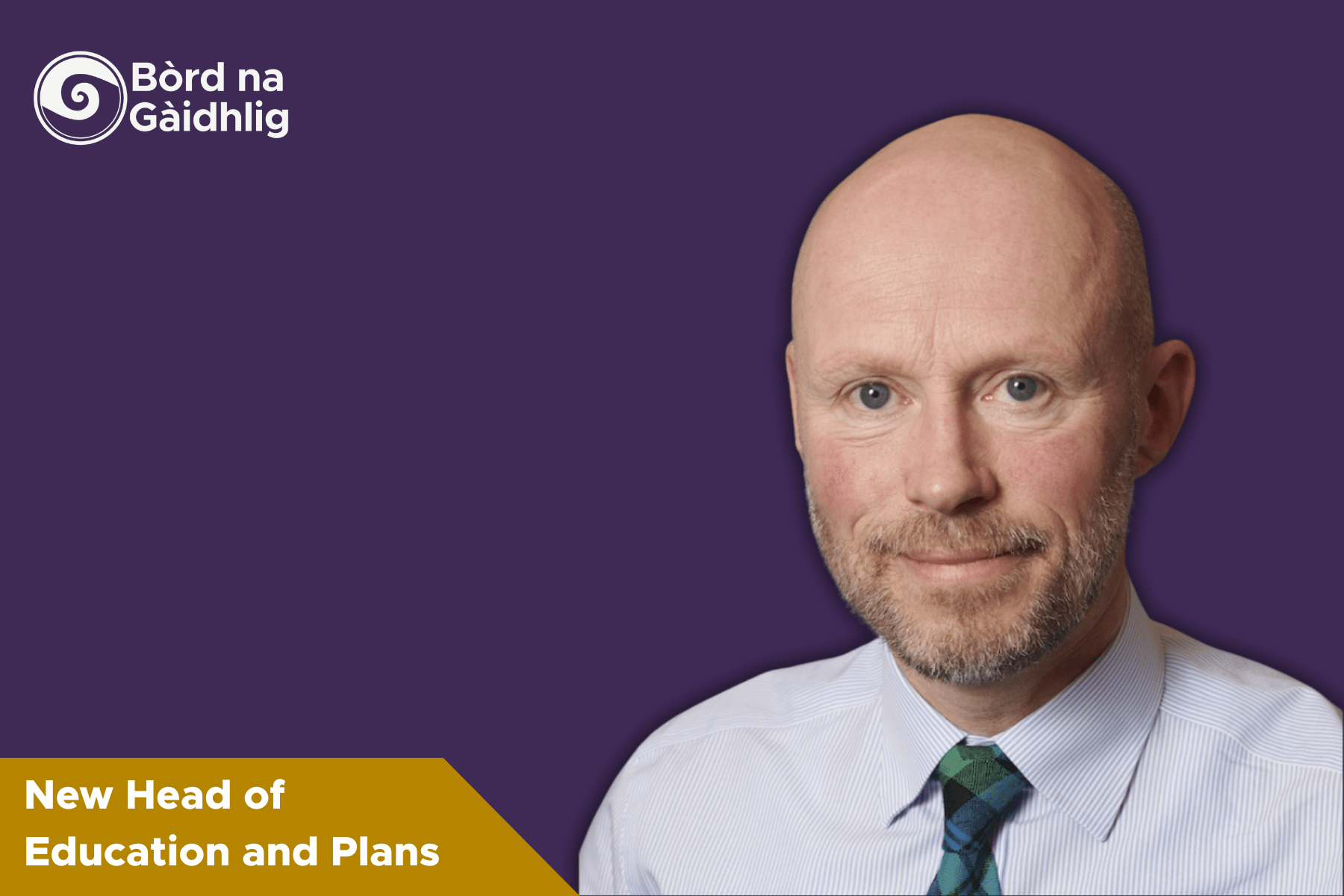
New Head of Education and Plans

Tha Bòrd na Gàidhlig are hapy to announce that Calum Munro has been appointed as the organisation’s Head of Education and Plans and will take up the post in November.

In this role, Calum will lead Bòrd na Gàidhlig’s work regarding our statutory responsibilities within education and learning. He will also oversee the outcomes of the Gaelic Plans Officers, who’s work is directed by the Statutory Guidance for Gaelic Plans.

The Bòrd na gàidhlig team are very much looking forward to working with Calum when he starts in post next month.

Training Sessions for Early Years Groups

Bòrd na Gàidhlig have been busy organising a programme of different training opportunities for committees and support workers for 2025/2026.

We are working in partnership with Kirsteen Murray, Manager and Development Officer for the Early Years, Comann nam Pàrant to run some face to face sessions on the use of appropriate songs, stories and useful props to use in Gaelic song and Story sessions. In this session you will learn skills to use different songs and stories that you can use in your groups. You will also be directed to different helpful resources and books that are appropriate for children 0-3 years.

In partnership with Corinna Shearer, Head of Quality, Learning and Workforce Development with Care and Learning Alliance, CALA, you will learn different skills for running a committee, how to do risk assessments and advice on health and Safety.

Ann Traill , Finance Officer with Voluntary Action in Badenoch and Strathspey, will provide relevant information on financial governance and good working procedures for committees.

Please feel welcome to attend the sessions. Some of the sessions will be delivered online, while others will be delivered in person. You can find more information and register for the sessions here.

Gaelic Officers Scheme Invests in Communities

Bòrd na Gàidhlig has announced the allocation of funding for Gaelic Officers through a new round of the Gaelic Officers Scheme. The Scheme is funded in partnership by the Scottish Government and Bòrd na Gàidhlig and will support 27 posts across a range of organisations as they undertake Gaelic development work in communities across Scotland. Several groups will now benefit from multi-year support from the scheme for the first time.

The latest round of funding was opened in May and closed to new applications in June. A range of changes were made to the previous scheme, including further support and professional development for Gaelic officers. Bord na Gàidhlig received 44 applications from a wide range of charities, with a mix of previously-supported organisations and new bodies seeking support.

Successful applicants to the scheme had to meet a range of criteria and outline how they would deliver against the key priorities set out by Bòrd na Gàidhlig, including supporting the everyday use of Gaelic in communities, supporting Gaelic centres and events, developing community Gaelic language plans and supporting partnership working across organisations delivering Gaelic services.

Ian MacMillan, Director of Development at Bòrd na Gàidhlig, said:

“Bòrd na Gàidhlig is delighted that officers funded through this scheme will now be working to make a positive impact on Gaelic in their communities. These officers will make a clear and visible difference through their activity and engagement. We are looking forward to seeing an increase in partnership working as we enable organisations to build connections to deliver across our communities.”

Depute First Minister Kate Forbes said:

“This £600,000 investment in the Gaelic Officer initiative aims to help Gaelic to thrive in traditional areas like the Western Isles and Skye. Gaelic Officers enrich communities and support activities which bring economic benefits to Scotland.

To support Gaelic’s growth, our Scottish Languages Bill will strengthen the rights of parents to ask for a Gaelic school to be established in their area and introduce targets on the number of people speaking Gaelic.”

You can find more information about Bòrd na Gàidhlig’s Gaelic Officers Scheme here.

Bòrd na Gàidhlig runs a number of funding schemes at various times throughout the year. If like to speak to Bòrd na Gàidhlig about funding opportunities for organisations and projects, please email tabhartas@gaidhlig.scot.

Questionnaire on Gaelic Usage


Every year Bòrd na Gàidhlig runs a short survey looking at the use of Gaelic and how it might have changed over the last year.

We’re looking for anyone with a little bit or a lot of Gaelic to fill in the survey and it will take less than 5 minutes to complete. We would also be grateful if you could share it through your networks.

The survey is only open for 24hrs and will close at 12pm tomorrow, Thursday 26.06.25!

Complete the survey below or through this link.


Gaelic Early Years Grants scheme opened to applications

Bòrd na Gàidhlig have launched the 2025/26 Gaelic Early Years Grants funding scheme, with funding provided for early years groups across Scotland to deliver Gaelic sessions.

The scheme is open to all voluntary and third-sector groups, with support up to £4,000 available for groups that meet weekly, and up to £15,000 available to groups that meet more regularly.

This year’s scheme would specifically like to support groups that can show how they will achieve the following outcomes:

  • Ensuring that children and families have sustained access to Gaelic early years provision
  • Increasing the number of children continuing with Gaelic-medium learning at key transition stages
  • Helping more families in Scotland become aware of the benefits of bilingualism and the opportunities offered by Gaelic-medium education
  • Helping parents become better informed on resources and opportunities to support and interact with their children through Gaelic in homes and communities

Two information sessions will be delivered to provide you with an opportunity to learn more about the scheme, get support with filling out application forms, and to ask any questions you may have. You can find more information about the sessions and register to attend on Eventbrite here.

The Scheme Guidance and further information is available here.